
Your needs, this model
Does it fit your priorities?
Does the FGP28A include a head, and what attachment does it provide?
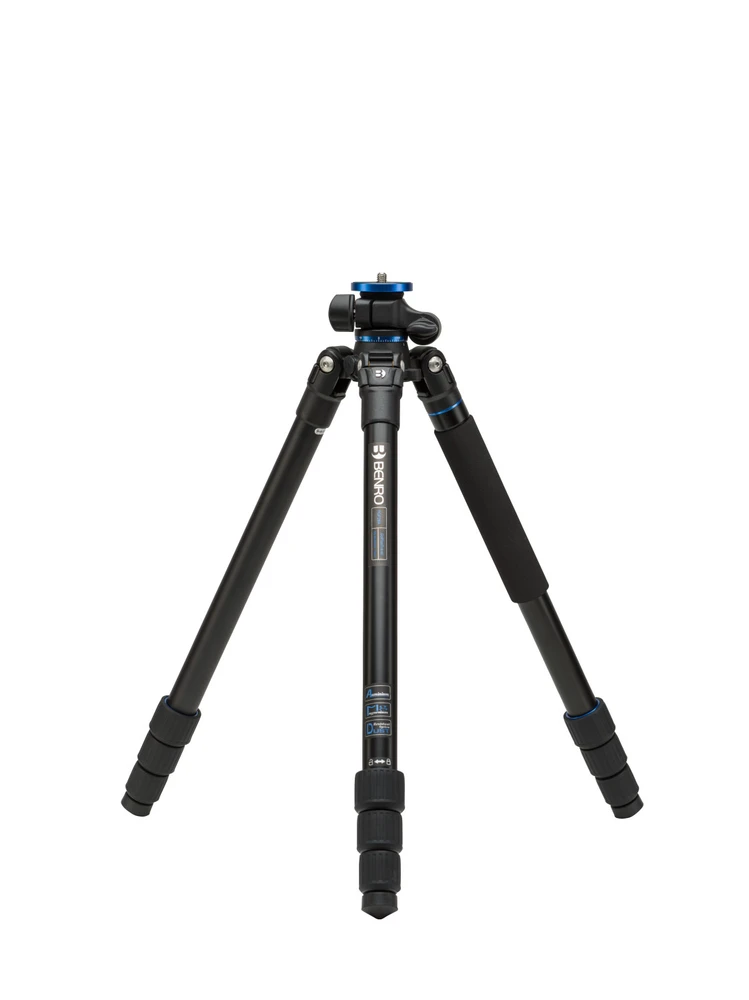
No head is included in the reviewed FGP28A configuration. Benro calls it a tripod-only product and lists a 3/8-16 mounting screw; B&H lists the exact MFR FGP28A as tripod-only with a male 3/8-16 top mount. Match a separately selected head to the stud and then verify that head's plate, clamp and camera or cage fit. Do not count the integrated lateral-column joint as a ball head.
Explore this need in the finder →Can I place the FGP28A center column horizontally for close-up or offset framing?
Benro describes the exact FGP28A column as lateral: it can tilt horizontally and lock in different positions. The exact B&H listing also identifies lateral support. This documents the mechanism, but not stiffness, an off-axis load limit or camera/lens clearance; choose a properly attached head and check the complete arrangement before relying on it.
Explore this need in the finder →Will the FGP28A fit a 165 cm listed-height minimum, 50 cm fold ceiling and 2.0 kg tripod-weight cap?
Benro lists 65.2 inches maximum, 19.5 inches closed and 1.92 kg product weight; B&H pairs those with 165.6 cm, 49.5 cm and a rounded 1.9 kg. On the finder's supported steps, 165 cm, 50 cm and 2.0 kg admit the maker's published fields, while 166 cm, 49 cm or a strict 1.9 kg cap do not. These are product-listing thresholds, not final camera height, bag fit or a complete carry-system mass.
Explore this need in the finder →The FGP28A is the aluminum tripod-only member of Benro’s SystemGo Plus line: a four-section, reverse-folding set of legs with twist locks, a lateral center column and a convertible monopod leg. Its key distinction is not a supplied head; it is the freedom to choose a head while retaining an unusual side-column option.
Read the exact package code first
Benro’s US product page names the item “Tripod Only” and identifies the SKU as FGP28A. It describes a top plate with a 3/8-16 screw, and the exact-MFR B&H specification calls that mount male. The listing is therefore a headless arrangement: a head and camera plate are separate decisions. The upper joint in Benro’s product photograph is part of the column-positioning mechanism, not evidence that a ball head is included. Before choosing a separate head, confirm its base thread, mounting surface and camera-side release plate; a matching screw alone does not establish clearance or plate-clamp compatibility.
This is an important configuration distinction within the broader SystemGo family. Do not rely on a broad product-family name or image alone to confirm whether a particular seller’s offer includes a head. The exact US SKU and written box contents should agree with the tripod-only arrangement described here.
A lateral column is the defining capability
Benro says the FGP28A’s center column can tilt horizontally and lock in a range of positions. That makes the model relevant when a conventional centerline camera position is not enough—for example, a close-up composition where the subject is difficult to frame from directly above, or a setup that needs the camera offset from the leg apex. The exact-code B&H listing also describes lateral support. Unlike a fixed vertical column, this mechanism adds a way to reposition the mounting point without changing to a separate arm.
The capability is a framing option, not a stability result. Moving a camera and lens away from the center of the leg footprint changes the geometry of the setup. Benro’s published load statement does not tell us what an off-axis arrangement will tolerate on a particular surface, in a gust, or with a long lens. Balance the intended rig, use a compatible head, and avoid treating the maximum-load number as a tested lateral-working limit. The tilt lock, joint play and operating clearance also deserve inspection before a high-value camera is left in an offset position; no such hands-on checks were performed for this assessment.
Travel numbers, in their proper context
Benro lists a maximum height of 65.2 inches, a 15.4-inch minimum and a 19.5-inch closed length. The exact-code US retailer expresses those as 165.6 cm, 39.1 cm and 49.5 cm, respectively. B&H separately lists 135.3 cm maximum height without the center column. These are catalogue dimensions rather than a promise of camera-eye height: the mounted head and camera change the final position, and the photographer’s viewfinder height is not specified.
The listed 49.5 cm fold is a useful screening measurement, but not the opening length of the supplied case or the packed size with a chosen head attached. Likewise, Benro gives the tripod’s product weight as 4.23 lb / 1.92 kg. B&H rounds the weight to about 1.9 kg. That small difference matters if a strict weight ceiling is near 1.9 kg, so use the more precise maker figure for a conservative screen and verify the exact package. Neither listing is the total carried weight of a head, camera, lens, bag and accessories.
Two operating modes, one tripod identity
In the ordinary tripod arrangement, the four aluminum leg sections use sealed twist locks, and the legs fold back around the center column for transport. Benro says the lock seals help resist dust and moisture; that is not a waterproof rating, proof of performance in grit, or evidence of lock longevity. The manufacturer lists a carrying case and interchangeable spiked feet, which can be useful for storage and for surfaces where spikes are appropriate. Confirm the exact seller package and choose rubber or spiked contact deliberately for the surface; feet do not compensate for an unstable support point.
For a different job, Benro describes joining the blue-ring leg to the center column to create a monopod. This is a separate setup from the three-leg camera support evaluated by the finder. It can reduce the need to carry a second support for situations where a tripod footprint is impractical, but a monopod does not provide a freestanding tripod’s three-leg support. Do not apply the tripod’s height or load figure to the converted monopod unless the specific configuration is documented.
Where the FGP28A sits against another headless option
The aluminum Benro TMA28A is another four-section, twist-lock tripod-only configuration with a separately chosen head. Its reviewed sources list 155.5 cm maximum height, 52.5 cm closed length and 1.76 kg; they do not document a horizontal column. By comparison, the FGP28A is listed higher and shorter folded, but heavier, and it adds a documented lateral-column arrangement. That is a practical difference in supported use, not a claim that either model is steadier or better built. Choose by the geometry you need, exact head interface, and what you are prepared to carry.
Who should keep it on the shortlist?
The FGP28A is a research-supported candidate for someone who needs a lateral center column, wants aluminum twist-lock tripod legs, and is comfortable selecting a head separately. Its case, spikes, reverse-folding layout and monopod-conversion option broaden the documented toolkit. Its limits are equally specific: there is no included camera head; the product is listed at 1.92 kg before counting the rest of the rig; the column-down height is lower than the overall maximum; and a horizontal camera position is not a tested off-axis support claim.
Use the published figures to screen, then check the exact code, separate head, mounting threads, plate, camera clearance, case opening and setup instructions for the item you are considering. Benro says “30 lb” in the product overview, while the exact-code B&H specifications state 30.9 lb / 14 kg; preserve that source discrepancy rather than interpreting either number as a universal working load. This is a comparison of documented specifications, not a field trial, an independent payload test, or an evaluation of a particular seller’s current stock or package condition.
Key specifications
Key details at a glance
| Listed support or kit weight | 1.92 kg |
|---|---|
| Leg material | Aluminum |
| Maximum height (as listed) | 165.6 cm |
| Maximum height, column down | 135.3 cm |
| Minimum height | 39.1 cm |
| Closed length | 49.5 cm |
| Leg sections | 4 |
| Leg-lock style | Twist locks |
| Head supplied with tripod legs | No |
Use the exact model’s instructions for operating limits, supplied equipment and version differences.
Sources for this review
Sources for this assessment

Make the choice fit your whole camera setup
Start with your head, camera and lens, then use the published figures as screening limits rather than field-performance claims.