
Your needs, this model
Does it fit your priorities?
Does the TAD28C include a tripod head?
No camera head is named in the exact Benro TAD28C item-includes list, which names tripod and carry case; Benro and B&H describe attaching a separately selected compatible head to its 3/8-16 mount. Check the exact seller package, then match the selected head, plate and camera/cage rather than assuming the mounting thread settles fit.
Explore this need in the finder →Does the TAD28C meet a 156 cm published tripod maximum?
Benro lists 156 cm overall with the center column extended, and B&H's rounded 61.4-inch figure is consistent. A 156 cm minimum in the finder admits the published field; 157 cm excludes it. This does not guarantee final viewfinder height, and the consulted exact sources do not give a separate column-down maximum.
Explore this need in the finder →Can the TAD28C fit a 53 cm fold ceiling and a 1.5 kg tripod-weight cap?
By the listed product fields it fits a 53 cm closed-length ceiling (Benro: 52.5 cm) and 1.5 kg product-weight cap (Benro: 1.43 kg); the finder rounds the first condition in whole centimeters and the second in 0.1 kg steps, so 52 cm or 1.4 kg would exclude it. That is not a measured travel bag or whole camera-system weight.
Explore this need in the finder →How does TAD28C trade off against its TAD27C carbon-fiber sibling?
Benro lists TAD28C at 52.5 cm closed and 1.43 kg with four leg sections, while the separately listed three-section TAD27C is 61.5 cm closed and 1.38 kg. TAD28C is therefore the shorter listed package but is not as tall on paper (156 cm versus 162 cm maximum with column extended) and is slightly heavier by the maker figures. Compare both exact codes and separately confirm the head and carried accessories.
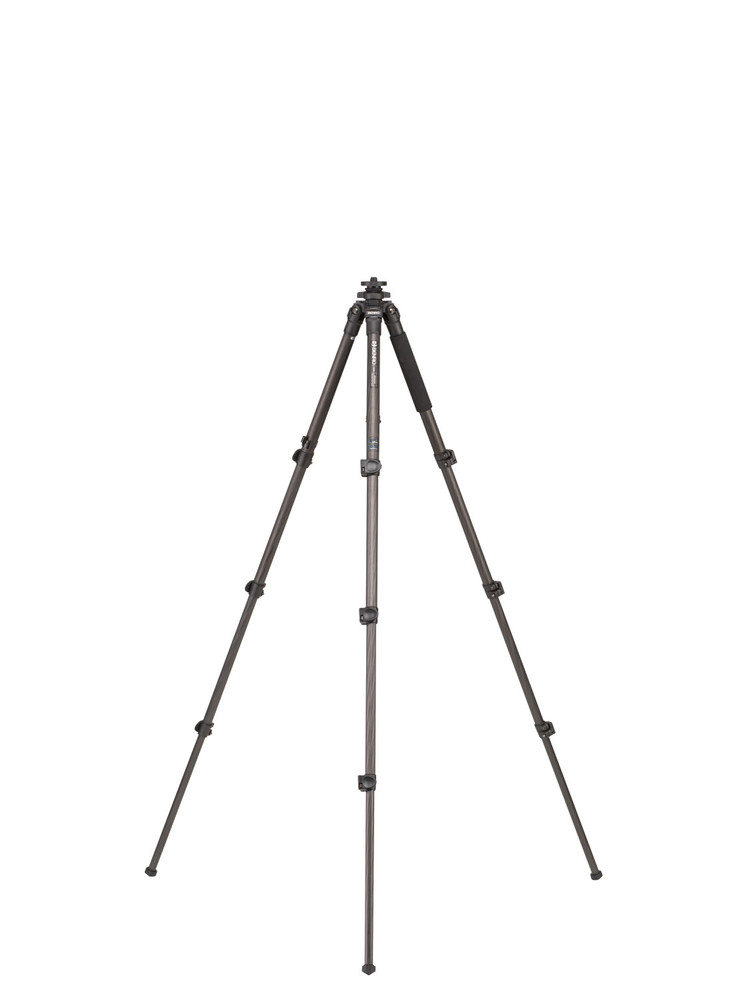
Explore this need in the finder →The TAD28C is a four-section carbon-fiber set of tripod legs, not a ready-to-use head kit. Benro's U.S. page identifies the exact code and lists a 3/8-16 head mount, four flip-lock sections, tripod and carry case. B&H's exact-MFR listing describes the same separately selected compatible-head arrangement. This assessment compares those documented facts; it does not claim hands-on use, testing, measurement or a customer experience.
Confirm the package before comparing heads
The most important purchase distinction is the SKU. The TAD28C page lists the tripod and case, then says to attach a compatible head of your choice. The head is therefore a separate decision. Its top thread is 3/8-16, a common tripod-head interface, but thread size by itself does not prove a particular head, quick-release clamp, camera plate or cage will work as one safe system. Check the head's base, anti-rotation provision, plate and camera connection, then verify the exact seller package rather than assuming a photograph or family name supplies the missing pieces.
Keep nearby model names separate. TAD28CB2 is a different Benro listing that names a B2 head; TAD28A is an aluminum tripod-only variant. TAD28C is the carbon-fiber tripod-only code. Those are real package and material differences, not spelling variations. The maker page says a carry case is included, while B&H describes a shoulder strap; that listing does not establish the condition or completeness of an individual seller's box.
Four sections prioritize a shorter closed package
Benro and the exact-MFR retailer describe four leg sections and flip locks. The manufacturer specifies 28.6, 25.2, 21.8 and 18.4 mm tube diameters, and describes carbon-fiber legs with magnesium castings. Those measurements and materials do not establish stiffness, vibration control, durability, water resistance or the feel of the locks. Without physical use or a model-matched operating manual, I cannot assess how quickly the levers adjust, how much force they need, or how they hold up after repeated field cycles.
The listed closed length is 52.5 cm (20.7 in), and the maker's product-weight field is 1.43 kg; B&H rounds it to 3.2 lb. Those are useful comparison points for a bag or carry plan, not a promise that the tripod fits a particular compartment. Confirm the actual case's interior and opening dimensions, and account separately for the chosen head, camera, lens and any accessories. The sources do not say whether the listed tripod weight includes the case, so I would not treat it as the weight of a complete carry kit.
The TAD27C comparison makes the trade-off clearer
Benro's separate three-section carbon-fiber TAD27C is listed at 61.5 cm closed, 1.38 kg and 162 cm maximum with its center column extended. TAD28C's own published figures are 52.5 cm, 1.43 kg and 156 cm. In other words, the four-section TAD28C closes 9 cm shorter on the maker's listings, while weighing 0.05 kg more and reaching 6 cm less in its column-up maximum. That comparison helps distinguish these two exact models; it is not a measured stability ranking or proof that four sections feel less rigid. A buyer who prioritizes height may prefer the documented TAD27C dimensions, while one with a stricter storage ceiling may find the TAD28C length worth evaluating. Both are headless arrangements and both require exact head and package checks.
Separate the listed height from your camera position
Benro lists 156 cm as the maximum with the center column extended. B&H reports a rounded 61.4-inch maximum and a 12.2-inch minimum, consistent with the maker's 31 cm minimum. A tripod's maximum is not a photographer's final viewfinder height: the selected head, plate, camera body and eye position all add or change height. Conversely, a low tripod minimum does not tell you whether a large body, long lens or cage will clear the floor. The exact pages consulted do not provide a separate maximum with the column down, so do not infer one from the 156 cm figure or from the minimum.
Do not read the payload number as a field result
Both exact-code sources list a 12 kg (26.5 lb) payload. That is a published rating, not an independent safe-working-load test, a vibration measurement, or evidence about wind, off-axis loading, long-lens handling or a particular head-and-camera combination. It should not replace checking the complete system's interfaces and the model-specific instructions. The general manual index I consulted lists several tripod-family PDFs but does not identify which one, if any, applies to TAD28C. I have not imported another family’s leg-lock steps or center-column procedure into this review; ask Benro for guidance that names this exact code before setup or service.
The Benro product page states a limited three-year warranty and says online registration extends it to five years. Warranty territory, eligibility, registration timing and seller terms should be confirmed for the exact purchase rather than treated as a universal promise. No independent recall finding or live offer status is established here.
Who should keep it on the shortlist?
TAD28C is worth comparing when four-section carbon-fiber legs, flip locks, a separate-head 3/8-16 mount and a 52.5 cm published fold match the intended setup. It is a less obvious choice if a head must be included, if the camera needs more than the listed 156 cm column-up maximum, or if horizontal-column behavior is a hard requirement: that feature's presence or absence is not confirmed in the exact sources reviewed. Before purchase, check the code on the offer, supplied case, head and plate fit, actual packed dimensions, model-specific instructions, and current warranty terms. The evidence supports a configuration-based assessment, not a claim of testing or an all-purpose recommendation.
Key specifications
Key details at a glance
| Listed support or kit weight | 1.43 kg |
|---|---|
| Leg material | Carbon fiber |
| Maximum height (as listed) | 156 cm |
| Minimum height | 31 cm |
| Closed length | 52.5 cm |
| Leg sections | 4 |
| Leg-lock style | Flip locks |
| Head supplied with tripod legs | No |
| Upper head attachment | 3/8"-16 male |
| Carrying bag included | Yes |
Use the exact model’s instructions for operating limits, supplied equipment and version differences.
Sources for this review
Sources for this assessment

Make the choice fit your whole camera setup
Start with your head, camera and lens, then use the published figures as screening limits rather than field-performance claims.