
Your needs, this model
Does it fit your priorities?
Which head and plate system comes with the exact KingPod kit?
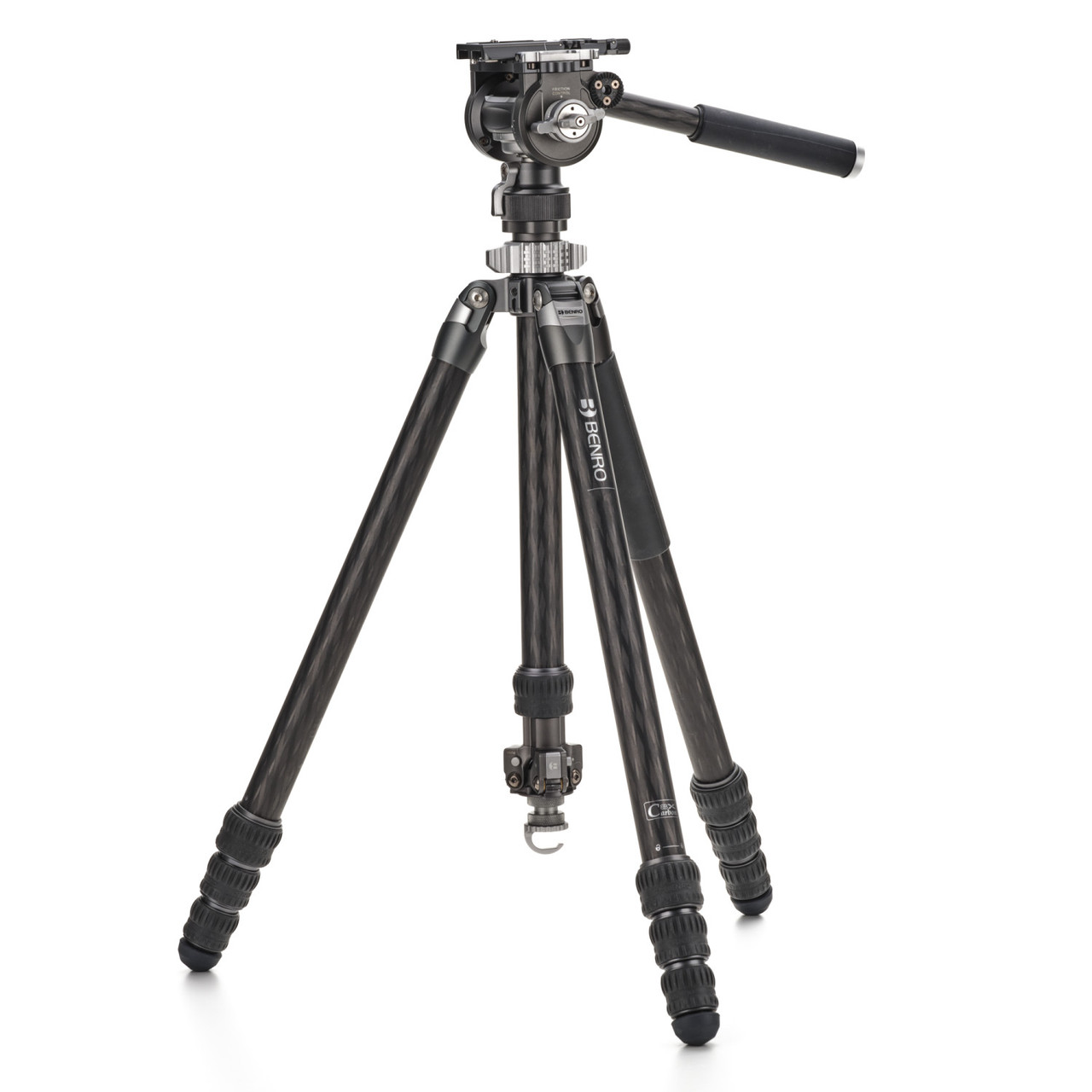
The exact US SKU TKPD24CFS36PRO includes the FS36PRO hybrid video head. Benro lists a video head with pan, tilt and drag control, while B&H describes this head as fluid; Benro's table lists fixed pan and tilt drag. The retailer describes a side-loading 501-style plate with an Arca-type clamp. Confirm the exact box and the kind of drag your work requires.
Explore this need in the finder →Will the KingPod fit a 65 cm storage limit and 2.5 kg carry cap?
Not under those strict published limits. Benro lists a 65.5 cm closed length and 2.55 kg kit weight, so the whole-centimeter and 0.1 kg finder accepts ceilings of 66 cm and 2.6 kg, not 65 cm and 2.5 kg. The exact case dimensions are not a proof of internal fit or carry clearance.
Explore this need in the finder →Can the full tripod, mini tripod and monopod modes be used together?
No. Benro describes the full three-leg tripod, integrated mini tripod and detached-leg monopod as convertible alternatives. The split center column is another low-angle tripod arrangement, not a horizontal-column mechanism. Choose the mode and mount required for the shot, and do not combine one mode's dimensions or height with another.
Explore this need in the finder →Assessment basis: This is a source-based review of the exact US Benro KingPod kit, model TKPD24CFS36PRO, not a hands-on test. I compared the manufacturer’s exact-code page and product listing with an exact-MFR US retailer listing. Neither published payload ratings nor feature descriptions establish camera-specific balance, motion smoothness, stability, vibration behavior or long-term durability.
A tripod kit designed to change roles
The KingPod is more than a set of carbon-fiber legs with a head attached. Benro identifies this exact package as a four-section CF 2-series tripod with its FS36PRO hybrid video head. The listing describes three distinct ways to support a camera: the full-height three-leg arrangement, an integrated mini tripod for tabletop use, and a monopod made by detaching a leg. Those are alternative operating modes, not a single setup that provides every configuration at once. The case and head are part of the exact-code listing; confirm the contents of the seller’s actual box before treating any accessories as included.
The component mix is the model’s strongest differentiator. The supplied head is a video-oriented inverted-ball design, with an operator-side control knob, pan arm, leveling ball, counterbalance tab and a quick-release arrangement described as compatible with 501-style and Arca-type plates. Benro’s itemized head specifications call it a “Video head” and list drag controls; B&H’s exact-code listing describes the head as a fluid head. Benro’s specification table also lists fixed pan and tilt drag. That difference matters: buyers who require a particular fluid cartridge or adjustable drag range should verify the exact head’s behavior and terminology with the manufacturer rather than assuming that “hybrid” means any desired video motion.
For still-photo use, the second Arca clamp and low-profile leveling ball may be more relevant than the long pan arm. For video, the head’s controls and counterbalance tab may reduce the number of separate adjustments during a change between photo and video workflows. The maker publishes a 6 kg maximum payload for the head. That is a rating, not evidence that a particular camera, lens, monitor or off-center rig will balance or move smoothly. Check the assembled rig’s mass, center of gravity, quick-release orientation and the manufacturer’s instructions.
What the numbers say about carrying and height
Benro lists the tripod at 2.55 kg, 65.5 cm closed, 24 cm minimum height and 175 cm maximum height. B&H rounds the carry values to 2.5 kg and 66 cm, while its overview rounds the maximum to 68.3 inches. The exact Benro metric values are the clearest inputs for this guide’s whole-centimeter, 0.1 kg finder: a 175 cm height minimum is met, but a 176 cm minimum is not; the 65.5 cm closed dimension needs a 66 cm ceiling, not 65; and a 2.55 kg published weight needs a 2.6 kg limit, not 2.5. The finder compares listed dimensions, not clearance inside a particular bag. Allow room for the case and anything attached to or carried with the tripod.
The maximum is not viewfinder height. Camera body, plate, head position and eye level affect where the camera sits for an actual framing task. The 24 cm minimum describes a low arrangement, but Benro separately calls out splitting the center column for low-angle use. That mechanism does not make the column horizontal; this kit does not have the sideways column feature asked about in our horizontal-column guide. A lowered column arrangement, the mini tripod and a monopod are distinct support choices. Do not use the 175 cm three-leg maximum as a claimed monopod height.
Four twist-lock sections keep the folded package relatively compact for a tall kit, but four locking points per leg take a different setup routine from a three-section support. Benro documents both rubber and spiked feet, multiple leg angles and accessory mounting threads. Those choices broaden where the legs can be set, but they do not by themselves establish secure placement on a particular floor, slope, loose surface or windy location. Select the appropriate foot arrangement and follow the setup instructions rather than reading the payload figure as a field-stability guarantee.
Who should compare it—and what to check first
This kit is most distinctive for someone who genuinely wants a single support system with a head already installed and expects to move among stills, video, tabletop and monopod setups. The carbon-fiber construction, listed 175 cm height and 2.55 kg mass give it a specific place in the reviewed library: it is lighter than the four current Manfrotto fluid-head kits assessed here, but those packages use different bowl, spreader, leg and plate arrangements. It should not be treated as an interchangeable substitute for a twin-leg video support. The Benro FRHN34CVX30 is a useful contrast: it is a lighter, shorter-folding carbon-fiber kit with a conventional VX30 photo ball head, but its sources report different closed-length values and its photo-head workflow is not the FS36PRO video setup.
Before buying, confirm the complete model code TKPD24CFS36PRO, the included FS36PRO head and carrying case, the supplied plate and its 501/Arca compatibility for your particular camera plate, and the 3/8-inch head/base interface. Ask whether the retailer’s listing matches Benro’s fixed-drag specification and whether the box has the expected counterbalance and pan-arm parts. Check whether 65.5 cm plus the case fits your storage space, and whether 2.55 kg is the configuration you will actually carry. Current product pages and seller listings do not establish a particular offer’s inventory, package condition, warranty eligibility or return terms.
Bottom line: The KingPod’s documented appeal is its combination of a hybrid photo/video head, convertible support modes and full-height carbon-fiber legs. Its published specifications make it a candidate for a 175 cm height requirement, a 66 cm folded ceiling and a 2.6 kg carry cap. The trade-off is that one system carries several mechanisms and the exact head’s drag behavior deserves closer verification. Compare the head and plate guide, then use the same-condition finder result rather than treating these published figures as a recommendation for every camera rig.
Key specifications
Key details at a glance
| Listed support or kit weight | 2.55 kg |
|---|---|
| Leg material | Carbon fiber |
| Maximum height (as listed) | 175 cm |
| Minimum height | 24 cm |
| Closed length | 65.5 cm |
| Leg sections | 4 |
| Leg-lock style | Twist locks |
| Head supplied with tripod legs | Yes |
| Head type | Fluid video head |
| Upper head attachment | 3/8-inch flat-base interface |
| Carrying bag included | Yes |
Use the exact model’s instructions for operating limits, supplied equipment and version differences.
Sources for this review
Sources for this assessment

Make the choice fit your whole camera setup
Start with your head, camera and lens, then use the published figures as screening limits rather than field-performance claims.