
Your needs, this model
Does it fit your priorities?
Is GT2543L the same tripod as GT2542?
No. GT2543L is the separate long four-section Series 2 model; Gitzo lists 179 cm maximum, 151 cm with column down and a 61 cm fold, compared with GT2542’s 56 cm fold and conflicted maximum-height field.
Explore this need in the finder →What heights are listed for the long GT2543L?
The exact U.S. page gives 179 cm maximum, 151 cm with the center column down and 16 cm minimum, with 61 cm closed.
Explore this need in the finder →What carry tradeoff does GT2543L make against GT2542?
GT2543L is 1.74 kg and 61 cm closed with 179 cm listed reach; GT2542 is 1.68 kg and 56 cm closed, with its maximum height unresolved because the table and prose disagree.
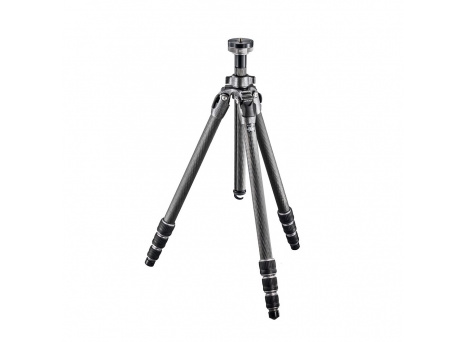
Explore this need in the finder →This assessment covers the exact Gitzo GT2543L, the long four-section Series 2 Mountaineer tripod in legs-only configuration. It is a source-led review, not a hands-on test. The long suffix matters: GT2543L is not the standard-height GT2542, and its maximum height, folded length and mass should not be transferred to that neighboring model or a kit using it.
The Long version's extra reach
Gitzo lists GT2543L at 179 cm maximum, 151 cm with the center column down, 16 cm minimum and 61 cm closed. The standard GT2542 detailed table lists a 165.5 cm maximum and 56 cm closed, though the GT2542 page's prose says 167 cm; that internal conflict remains unresolved in its separate review. GT2543L's official table is internally clear in the relevant visible fields. Its 179 cm figure gives a substantially higher published ceiling than the standard model, at the cost of a longer five-centimeter fold and a 60 g increase in listed weight from 1.68 to 1.74 kg.
Gitzo describes the long version as designed to reach eye level when fully extended. Treat that as the manufacturer's design intent, not a universal fit guarantee: camera body height, viewfinder position and your own stance change the result. The 151 cm column-down value is a distinct arrangement, not a measurement of stability. If a carry case has a strict length limit, compare the 61 cm tripod dimension with the case's usable interior rather than its outside size.
Headless equipment and operating positions
GT2543L has no head listed as included. Its upper screw reverses between 1/4 and 3/8 inch, so check the selected head's attachment before purchase and include that head in the total system mass. Gitzo lists no carrying bag. The legs use four long sections, G-lock Ultra twist locks and carbon-fiber/Carbon eXact construction; the specified tube diameters run from 18.3 to 29 mm. These are exact maker specifications, not independent testing of joint wear or deflection.
The 23-, 55- and 83-degree leg positions, removable/reversible rapid column and center-column stabilizer hook give several setup details to compare. The official Mountaineer manual illustrates the column's removal and inversion but not a horizontal pivot. It therefore should not be treated as a lateral-arm model for close-up work where the camera must move across the tripod footprint.
Payload and focal-length guidance in context
Gitzo publishes a 22 kg Safety Payload Weight under UNI/PdR 105:2021 and describes use with 200 mm lenses up to 300 mm. Both remain manufacturer specifications. The payload value is not a field-tested safe load or a stability guarantee for an off-center camera; the focal-length text does not certify a particular lens mass or photograph. A separate head must be appropriate for the system too. These values are useful comparison fields, not a substitute for evaluating the complete equipment arrangement.
Who should compare this exact configuration
GT2543L merits a closer look when high published reach is more important than the standard GT2542's shorter fold, and when a separately selected head is acceptable. If storage and carry take priority, compare the five-centimeter fold difference and 60 g mass change directly. Confirm the exact long model code, screw interface, current listing specifications and included package. No hands-on setup, independent measurement, current retailer stock, price or seller-added items were verified for this review.
The page labels its long configuration “4L”; keep that identity attached to GT2543L instead of treating it as an alias for an ordinary four-section Series 2. Gitzo also lists removable feet, a stabilizer hook and a −30 °C to 70 °C working-temperature range. These details may help with inspection or setup planning, but they are not independent climate or traction tests.
Key specifications
Key details at a glance
| Listed support or kit weight | 1.74 kg |
|---|---|
| Leg material | Carbon fiber |
| Maximum height (as listed) | 179 cm |
| Maximum height, column down | 151 cm |
| Minimum height | 16 cm |
| Closed length | 61 cm |
| Leg sections | 4 |
| Leg-lock style | Twist locks |
| Head supplied with tripod legs | No |
| Upper head attachment | Reversible 1/4- or 3/8-inch fixing screw |
| Carrying bag included | No |
| Manufacturer safety-payload figure (UNI/PdR 105:2021) | 22 kg |
| Leg-angle positions | 23 / 55 / 83° |
Use the exact model’s instructions for operating limits, supplied equipment and version differences.
Sources for this review
Sources for this assessment
Make the choice fit your whole camera setup
Start with your head, camera and lens, then use the published figures as screening limits rather than field-performance claims.