
Your needs, this model
Does it fit your priorities?
Is the GT3543LSUS sold with a head?
Gitzo identifies this exact SKU as legs only and lists no center column. A 3/8-inch screw is the top attachment, so confirm and choose the head separately rather than assuming a kit from a similar GT code.
Explore this need in the finder →What support height does the maker publish for the four-section long legs?
The GT3543LSUS page lists 146 cm maximum and 9 cm minimum. These are support dimensions, not a promise of camera-eye height after a separate head and camera are installed.
Explore this need in the finder →What do the closed length and weight include?
Gitzo lists 57 cm closed and 2.03 kg for the legs-only tripod. Add the separately chosen head, camera, lens and bag to your travel plan.
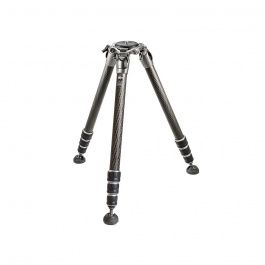
Explore this need in the finder →GT3543LSUS is a four-section, Series 3 Long Systematic tripod sold as legs rather than a head kit. Gitzo’s U.S. page lists 146 cm maximum support height, 9 cm minimum, 57 cm closed length and 2.03 kg weight. The dimensions are manufacturer figures for this exact model; no independent measurement or hands-on performance test is claimed here.
Exact model and supplied arrangement
GT3543LSUS is the long, four-section version of the Series 3 Systematic family. The exact listing identifies carbon-fiber legs and twist locks, no center column and no carrying bag. A 3/8-inch screw is listed at the top. It is therefore a different shopping configuration from an 83LR kit with an included head and plate. Check the entire code and package contents; do not infer a head from a photograph or from another product that shares “GT3543” in its name. Systematic is modular at the top casting. Gitzo describes optional flat disks, geared or sliding center columns, video half-ball adapters and leveling bases. Those accessories can change the arrangement, but they are not shown as included with this legs-only SKU. The provided manual includes instructions for mounting and removing accessory parts and for mounting a head. Confirm the correct separate component and its fit with the seller before buying rather than counting it as part of the base tripod.Why four sections may suit a shorter pack
The GT3543LSUS closes to 57 cm, shorter than the three-section GT3533SUS at 61 cm and the three-section long GT3533LSUS at 67 cm. Its 146 cm maximum sits between those two models: it is 16 cm higher than the standard GT3533SUS but 6 cm lower than the long three-section GT3533LSUS. Its listed leg weight of 2.03 kg is close to the latter’s 2.04 kg. This makes closed length and required maximum reach useful first screens: the four-section option packs shortest among these models without being the shortest in maximum height. Compared with GT3543XLSUS, the GT3543LSUS is 56 cm shorter at the published maximum (146 versus 202 cm), 14 cm shorter when closed (57 versus 71 cm), and 0.26 kg lighter (2.03 versus 2.29 kg). The XL has a very different purpose; its extra height comes with a different carry envelope. These are catalog measurements, not proof that either model is more stable or easier to handle in a particular setup. The product pages do not provide comparative field results.Leg-angle options and lock maintenance
The exact page lists four leg sections, 23°, 53° and 86° leg-angle positions, and G-Lock Ultra twist locks. Gitzo’s family instructions describe sliding angle stops and recommend checking ground contact at the lowest angle; on some models, a slight extension of the tubes can help achieve optimum contact. The instructions also say to extend the legs by turning the locks about a quarter turn together, then tighten individual locks. Dust or sand can be removed from the exposed lock thread, which may be greased sparingly using the specified product. These are the maker’s operating and care directions, not independent endurance testing. CarbonExact construction, a 70 mm upper disc and the Easy Link accessory connection are listed for GT3543LSUS. Easy Link provides a mounting point for optional equipment such as an arm supporting a light or monitor. It does not remove the need to check the center-of-gravity and attachment loads in the completed setup. The separate head must match the camera plate and the intended pan, tilt or ball-head operation.Do not treat the safety-payload number as a promise
Gitzo lists a 28 kg Safety Payload under UNI/PdR 105:2021. This is a manufacturer rating associated with a defined standard, not a field-tested capacity for your particular camera, head, lens, wind or leg extension. It is not an independent rating of a separately selected head. The actual arrangement includes more than the tripod legs, so check all relevant component limits and the load’s position rather than selecting solely by the largest number.What to verify with the exact seller offer
Confirm GT3543LSUS rather than a similar four-section XL or a supplied-head kit. Verify that the head and any center-column accessory you need are listed as included, because the maker’s exact page shows the legs-only arrangement with neither a head nor a column. Compare the 57 cm closed length and 2.03 kg legs-only weight with the space and load you can carry; add the head, camera, lens and bag. No price, retailer stock, seller condition or exact Amazon identity is established by the manufacturer evidence used here.Key specifications
Key details at a glance
| Listed support or kit weight | 2.03 kg |
|---|---|
| Leg material | Carbon fiber |
| Maximum height (as listed) | 146 cm |
| Maximum height, column down | 146 cm |
| Minimum height | 9 cm |
| Closed length | 57 cm |
| Leg sections | 4 |
| Leg-lock style | Twist locks |
| Head supplied with tripod legs | No |
| Carrying bag included | No |
| Easy Link accessory connector | Yes |
| Manufacturer safety-payload figure (UNI/PdR 105:2021) | 28 kg |
| Leg-angle positions | 23 / 53 / 86° |
Use the exact model’s instructions for operating limits, supplied equipment and version differences.
Sources for this review
Sources for this assessment

Make the choice fit your whole camera setup
Start with your head, camera and lens, then use the published figures as screening limits rather than field-performance claims.