
Your needs, this model
Does it fit your priorities?
Does the 202 cm GT3543XLSUS package include its own head?
No. The exact model is a legs-only Systematic tripod with no center column; the 3/8-inch top screw is where a compatible head can be selected separately. Verify the complete suffix and included components in the offer.
Explore this need in the finder →Is the stated 202 cm the height of my viewfinder?
No. Gitzo lists a 202 cm maximum support height and 10 cm minimum height for GT3543XLSUS. A separate head, camera position and eye point affect the final viewfinder level.
Explore this need in the finder →What should I plan to carry for GT3543XLSUS?
The legs alone are listed at 2.29 kg and 71 cm closed. Add your separately chosen head, camera, lens and bag; the tall configuration does not make the packed length disappear.
Explore this need in the finder →GT3543XLSUS is the extra-tall, four-section Series 3 XL Systematic legs model. Gitzo lists a 202 cm maximum support height, 10 cm minimum, 71 cm closed length, 2.29 kg mass and a 28 kg UNI/PdR 105:2021 Safety Payload. These are maker specifications for the exact legs-only SKU, not a report of product ownership, independent measurement or field testing.
Understand what is and is not in the GT3543XLSUS box
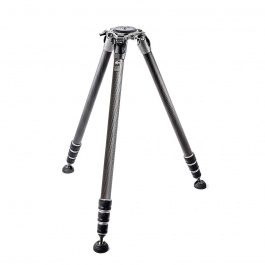
The exact page identifies carbon-fiber legs with four sections, no center column and no carrying bag. The top attachment is a 3/8-inch screw, so a head is a separate choice. A GT3543XLSUS product image shows the legs, but the photograph is not a package inventory; verify all included parts against the seller’s description and the exact code. A 83LR suffix is used for different head-included kits and should not be mistaken for this bare legs product. The top casting follows the Systematic modular design. Gitzo says it can accept optional configurations including a flat disk, geared or sliding column, video half-ball adapter and leveling base. The exact base page does not say that any of those components accompanies GT3543XLSUS. Adding a column or different top accessory changes the configuration and may affect its working height, so check the component version and package rather than treating modularity as an included feature.Height comes with a long fold and greater listed weight
Among the Series 3 models assessed together, GT3543XLSUS has the tallest listed maximum at 202 cm. Its 71 cm closed length and 2.29 kg legs-only mass are also the largest in the group. Compare that directly with the standard-height GT3533SUS, listed at 130 cm maximum, 61 cm closed and 1.93 kg; the long three-section GT3533LSUS at 152, 67 and 2.04; and the four-section GT3543LSUS at 146, 57 and 2.03. If your priority is a high viewpoint, the XL’s reach is the differentiator. If you prioritize a short case or minimum carried weight, each alternative has smaller published figures. These figures are the tripod’s support dimensions. They are not a promise of final viewfinder height, which changes when a separate head and camera are added. Maximum support height also does not tell you whether a fully extended camera and lens will clear the legs at every angle or have enough room for a given shot. Set the actual camera, lens and foot positions as part of your decision; no independent stability comparison among these models is available from the sources.Modularity and leg setup
Gitzo lists three leg angles (23°, 53° and 86°), CarbonExact tubes, G-Lock Ultra twist locks, a 70 mm upper disc and Easy Link. The family manual explains that the sliding stops permit three leg positions and that the lowest position may call for slight tube extension on some models to maintain ground contact. It describes extending the legs by turning locks about a quarter turn together and then tightening them individually. The same manual offers a cleaning procedure for dust or sand at the lock threads and a small quantity of specified grease. Follow the instructions delivered with the individual tripod, since a family manual does not replace any current model-specific updates. Easy Link supports an optional accessory arm for equipment such as a light or monitor. That is not a spare camera head or a substitute for the 3/8-inch top attachment. If you plan a dual-device setup, check every mount, cable, balance point and load limit with the actual accessories you intend to use.Use the manufacturer rating in context
The listed 28 kg Safety Payload is a UNI/PdR 105:2021 figure. It should not be read as a tested camera-load result or an assurance that an extended or high-mounted setup is stable in wind. Nor does it supersede the limit of the head, plate or any accessory. The rating helps describe the manufacturer’s classification; it cannot establish results for an untested combination of equipment and conditions.Practical checks before purchase
Verify GT3543XLSUS exactly and confirm that only the legs are included unless the seller separately lists a head or accessory. Check whether 71 cm closed and 2.29 kg before adding the head match your transport plan. Confirm the chosen head and camera clear the legs at the intended spread, especially at low angles, and compare the support maximum with your framing need rather than your eye height. Gitzo’s product information and Systematic instructions support this assessment; they do not establish price, current retail stock, the seller’s actual shipped package or hands-on performance.Key specifications
Key details at a glance
| Listed support or kit weight | 2.29 kg |
|---|---|
| Leg material | Carbon fiber |
| Maximum height (as listed) | 202 cm |
| Maximum height, column down | 202 cm |
| Minimum height | 10 cm |
| Closed length | 71 cm |
| Leg sections | 4 |
| Leg-lock style | Twist locks |
| Head supplied with tripod legs | No |
| Carrying bag included | No |
| Easy Link accessory connector | Yes |
| Manufacturer safety-payload figure (UNI/PdR 105:2021) | 28 kg |
| Leg-angle positions | 23 / 53 / 86° |
Use the exact model’s instructions for operating limits, supplied equipment and version differences.
Sources for this review
Sources for this assessment
Make the choice fit your whole camera setup
Start with your head, camera and lens, then use the published figures as screening limits rather than field-performance claims.