
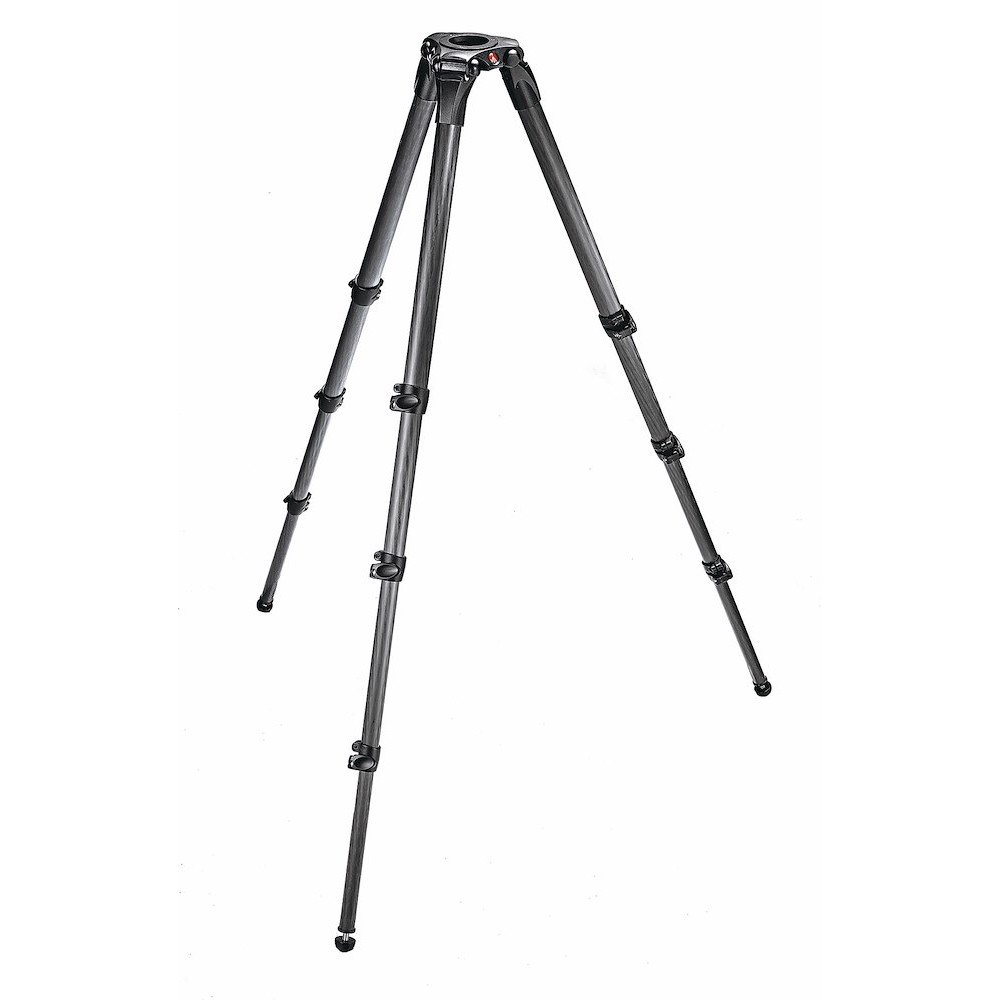
Your needs, this model
Does it fit your priorities?
Does model 536 arrive with a fluid video head?
No fluid head is listed for the standalone MFR #536 legs. Manfrotto and the exact-code US listing describe bowl legs and a supplied 75 mm adapter; a compatible 75 or 100 mm head is a separate component. Do not confuse those legs with the separate 504HD,536K kit, whose head and bag are package-specific.
Explore this need in the finder →Can I use this legs-only support with a 75 mm bowl head?
The official 536 page and family manual describe a 100 mm bowl with a supplied screw-in 75 mm adapter for a 75 mm half-ball head. The adapter is a support interface, not a video head. If the seller's offer is not the standalone MFR #536, confirm whether the correct adapter is actually in the box; do not transfer kit contents between the standalone legs and a preassembled head kit.
Explore this need in the finder →Is this the right option when horizontal center-column positioning is required?
No. The manufacturer lists no center column, and its separate leg-angle selector changes the footprint rather than moving a center column horizontally. If a sideways camera position is essential, screen for a documented horizontal-column mechanism instead and still assess the off-center rig and support surface separately.
Explore this need in the finder →The Manfrotto 536 is a specialist video-leg set, not a tripod kit with a camera head ready to shoot. Its useful distinction is the combination of a carbon-fiber leg assembly, a 100 mm bowl with a supplied 75 mm adapter, and a high listed maximum height. The family name can invite a comparison with complete video systems, but the standalone MFR #536 must be assessed on its own package: the head is separate, and the separate 504HD,536K bundle is not this product.
Read “3-Stage” and “four sections” as separate statements
Manfrotto's product title calls this a “3-Stage Video Tripod.” On that same official page, however, the overview and detailed field specification describe four leg sections; B&H's exact-code MFR #536 page also identifies four sections. I retain both descriptions rather than turning a product-title phrase into a false section count. For a setup, packing, or lock-count decision, the documented leg-section field is four. It is a single-leg-tube design, not the twin-leg layout used by some heavier video supports.
The current manufacturer specification lists a 26–203 cm working range, carbon-fiber leg material with magnesium components, flip locks, and no center column. It names a 25 kg Safety Payload Weight. That is a manufacturer rating, not a measurement of steadiness with a particular head, camera, lens, accessory arm, or leg spread. The separately chosen head brings its own limits and geometry; a maximum payload number cannot settle whether a real combination is usable.
Plan around the bowl, adapter, and separate head
The 536 offers a 100 mm bowl and Manfrotto lists a screw-in adapter for 75 mm half-ball heads. The family instructions describe securing that 75 mm piece with three screws. So the legs can serve more than one bowl size, but that does not mean a fluid head is supplied. The exact-code US listing itemizes the tripod and bowl adapter ring rather than a head. A separate 504HD,536K page explicitly describes a different assembled kit with a 504 head and MBAG100PN bag; those parts must not be assumed to accompany standalone 536 legs.
A flat-base photo or video head is another question. The manual describes optional 75 mm or 100 mm half-ball adapters for attaching a flat-base head; that conversion is an additional part, not the same supplied 75 mm bowl insert. Check the base diameter and the exact adapter path for the head you already own. If your intended head is a 75 mm bowl model, verify that the seller's box is the standalone 536 configuration with the correct adapter, rather than relying on a thumbnail or a shortened title.
Use the leg angles to change the footprint, not the head interface
The manufacturer lists three leg-angle positions—23°, 50°, and 70°—and the instructions say each leg can be adjusted independently. The widest position can bring the support to floor level, which is a genuine low-angle capability built into the legs. That is different from a center column pivoting sideways: Manfrotto lists no center column on this model. If a lateral overhead or copy-work position is the hard requirement, the 536 is not an answer to it merely because its feet can spread wide.
The manual documents lever-operated telescoping sections and explains how to adjust lock tension if a section does not hold after the lever is closed. It also describes rubber feet with retractable spikes. Those details make the setup route legible across a smooth floor and some outdoor ground, but they do not promise traction on every surface or remove the need to follow the manual. No mid-level spreader is listed for the standalone product; confirm any added spreader or dolly by exact accessory compatibility and do not treat one as part of the basic legs package.
Height is established; carry fit is not
A 203 cm tripod maximum is tall on paper, but it is not a viewfinder-height measurement. The camera plate, chosen bowl head, body, eyepiece, leveling position, and stance all change the final framing height. At the other end, the manual's floor-level leg angle offers a low viewpoint, while the manufacturer's minimum listed height is 26 cm. A buyer who alternates between very low shots and standing camera positions may value that span, provided the required head and operating space are checked.
There is an unresolved measurement conflict where a hard carry limit matters. The current Manfrotto product page lists 3.44 kg and 72 cm closed. Its shared 535/536 family manual lists 3.25 kg for model 536, and the exact-code B&H US page also reports 3.25 kg and 71 cm closed. The evidence does not explain the difference, so this assessment does not select the more convenient number. The matcher leaves the 536 out whenever a maximum tripod weight or folded-length limit is set. Treat the published figures as questions to reconcile with the exact seller and the physical package, not as a guaranteed fit for your case or total camera load.
Where it sits among other camera supports
Compared with the Manfrotto 528XB, the 536 is the carbon-fiber, four-section, high-reaching standalone video option with a documented 75/100 mm interface; the 528XB is a distinct aluminum-and-steel heavy-duty configuration with a 100 mm bowl and supplied half-ball leveler. Neither should be confused with its separate head kit. Compared with the very low 529B hi-hat, the 536 reaches a conventional video working height and offers no claim to the hi-hat's compact, near-ground role. And compared with the carbon-fiber 055 photo legs, which document a horizontal center-column mechanism, the 536 trades that framing feature for a bowl-based video-head arrangement.
The sensible fit is therefore narrow: someone who needs tall bowl-supported video legs, owns or will separately choose a compatible head, and is comfortable confirming exact mass and closed length before imposing hard carry limits. If you need a head-in-box system, a horizontal column, or a confidently known packed size and mass, compare a separately documented configuration instead. No hands-on testing or specific-rig stability test was performed for this research-based assessment.
Sources checked 29 October 2026: Manfrotto exact 536 product page; Manfrotto 535/536 family instructions; B&H exact-code MFR #536 listing; and the separate Manfrotto 504HD,536K kit page. Package, dimensions, mass, and head details are configuration-specific; none of these sources is evidence of testing by this site.
Key specifications
Key details at a glance
| Leg material | Carbon fiber |
|---|---|
| Maximum height (as listed) | 203 cm |
| Leg sections | 4 |
| Leg-lock style | Flip locks |
| Head supplied with tripod legs | No |
Use the exact model’s instructions for operating limits, supplied equipment and version differences.
Sources for this review
Sources for this assessment
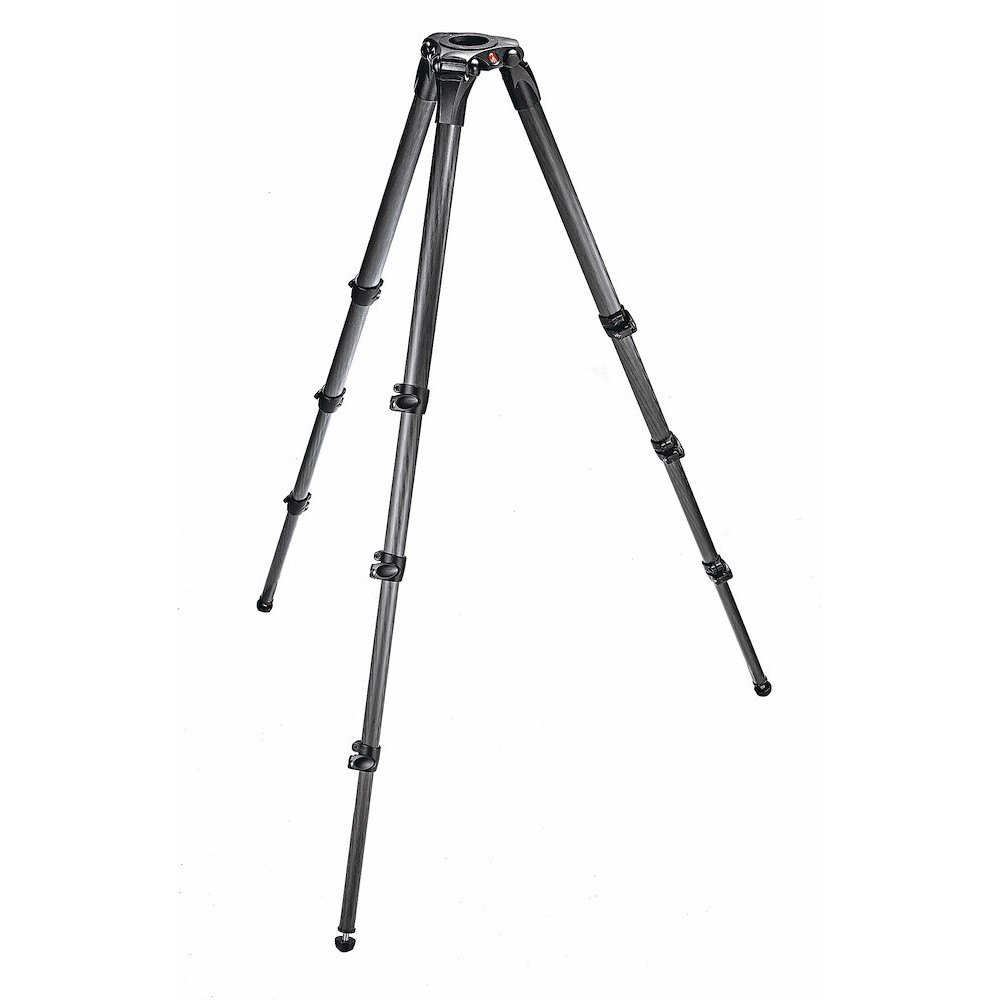
Make the choice fit your whole camera setup
Start with your head, camera and lens, then use the published figures as screening limits rather than field-performance claims.