
Your needs, this model
Does it fit your priorities?
Is MTONEA a complete tripod-and-head kit?
No. MTONEA is the aluminum legs-only code. Manfrotto documents a 3/8-inch attachment and XCHANGE interface, but a compatible head is a separate choice; check whether that head needs an XCHANGE plate and what the exact seller box includes.
Explore this need in the finder →How does the aluminum version compare for carrying?
Manfrotto lists MTONEA at 3.55 kg and the carbon-fiber MTONEC at 3.15 kg, a 0.40 kg published mass difference. The two exact pages list the same 170.5 cm maximum and 70.5 cm closed length; those measurements do not establish a difference in field stability.
Explore this need in the finder →What should I verify for an overhead Q90 setup?
The manufacturer gives a 7 kg safety-payload figure with the column in Q90, lower than its 15 kg ordinary vertical-column figure. Check a compatible head, seller dimensions if minimum height matters and the complete rig against the current manual; no offset setup was tested.
Explore this need in the finder →This is a specification-led assessment of the exact MTONEA legs-only model, not a hands-on review. No sample was assembled, carried or load-tested; the published payload figures do not establish stability with a particular camera, head or off-center setup.
The aluminum version is the same hybrid platform
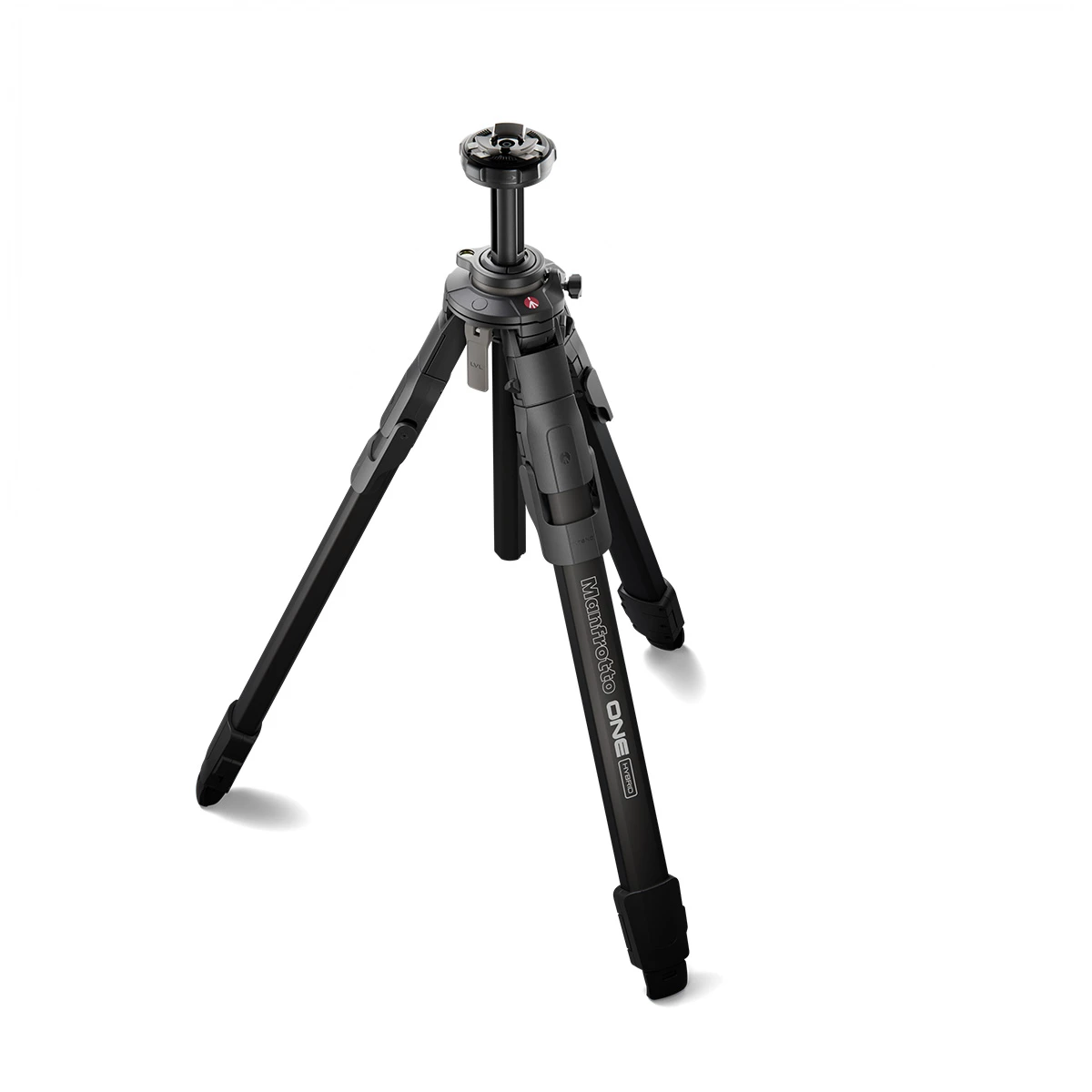
Manfrotto's ONE Hybrid Aluminum Tripod is the aluminum version of the brand's stills-and-video leg platform. MTONEA is the exact legs-only model: it does not include a head. A compatible head and any required mounting plate must be chosen separately, so do not confuse this code with a ONE kit sold with the 500X fluid head.
The top uses a 3/8-inch attachment and the system also has an XCHANGE interface. Manfrotto says that most heads need an XCHANGE plate, although a compatible XCHANGE-ready support such as its 500X can connect directly. That makes the head choice more than an accessory afterthought: confirm how the intended head fits and whether the exact box includes the required plate. The maker lists no carrying bag with this standalone code.
Why the Q90 column changes the use case
The main point of distinction from a simpler vertical-column tripod is the Q90 mechanism. It moves the center column to a horizontal position for overhead or flat-lay shots, while the leveling control helps adjust the camera platform. Manfrotto also describes a lower column section that detaches for low-position work. That combination may help a hybrid shooter who often switches between ordinary framing and product, tabletop or tutorial views.
Pay attention to the manufacturer's two payload figures. The ordinary safety-payload listing is 15 kg; Manfrotto states 7 kg when the column is in the Q90 position. The smaller number is the relevant one to consider for a horizontal-column arrangement. Neither number is a measured guarantee for a specific camera and lens, and an off-center setup is not the same as a centered vertical load. Use the instructions and assess the complete head-camera arrangement rather than treating a headline rating as a stability test.
Not a lightweight travel tripod
Manfrotto lists 3.55 kg for the legs, a 170.5 cm maximum height, 140.2 cm with the column down, 19 cm minimum height and 70.5 cm closed length. The dimensions give a substantial range from a low setup to a near full-height working position. But 70.5 cm is a long package to carry, and 3.55 kg is the legs alone; the chosen head, plate, camera and accessories increase the full kit's mass.
The carbon MTONEC is listed at 3.15 kg, 0.40 kg lighter, with the same published maximum height and folded length. That is a real published distinction between the two material versions, but it is not evidence of a measured change in stiffness or damping. Choose the material around your carrying needs and budget only after comparing a current offer; no price or seller availability is established here.
There is also a specification-reading caveat. The accessible B&H product-page text does not consistently repeat the maker's minimum-height and folded-length figures, and one specification panel shows other outlying values. For this assessment, the exact Manfrotto product page supplies the reference metrics. If minimum height or packing dimensions are essential, verify them with the seller for the exact MTONEA code before purchase.
Leg locks and accessory features
The aluminum tripod has three leg sections with flip locks. Manfrotto lists positions of 20, 50 and 81.5 degrees and describes XTEND as unlocking all leg sections at once. Its non-round leg design, removable feet that reveal spikes, Easy Link attachment point and XCHANGE system give the platform several ways to adapt to a stills or video setup. Those are manufacturer-described features, not results from a field test of setup speed, grip, torsional resistance or image sharpness.
With an appropriate head, the column and quick-change system can support a workflow that alternates among vertical stills, video and overhead framing. Without that head, MTONEA is only the legs. A smooth pan is not supplied by the tripod itself, and a separately selected head must suit the camera rig and the interface. If the carrying case, a particular plate or the fluid head matters to your purchase, inspect the seller's exact included-items list rather than inferring it from another ONE family product.
Who should shortlist the MTONEA?
It is a reasonable candidate when you want the Q90 and leveling options in an aluminum full-height support and can accept a 3.55 kg bare-leg weight. Consider the carbon MTONEC if the 0.40 kg listed saving matters; consider a simpler or more compact model if the column features will rarely be used or the folded length is a problem. Neither comparison answers whether the finished setup is steady with your lens, head, surface and wind exposure.
Before buying, check the exact MTONEA code, the head's compatibility, the plate requirement, the current manual, the minimum height and the seller's box contents. The assessment relies on Manfrotto's exact-model metric specifications and the U.S. retailer's exact code, not on stock, price, package extras or hands-on testing.
Sources: Manfrotto ONE Hybrid Alu Tripod product page, B&H exact MTONEA listing, and BCCamera exact-MPN image page. Sources checked November 5, 2026.
Key specifications
Key details at a glance
| Listed support or kit weight | 3.55 kg |
|---|---|
| Leg material | Aluminum |
| Maximum height (as listed) | 170.5 cm |
| Maximum height, column down | 140.2 cm |
| Minimum height | 19 cm |
| Closed length | 70.5 cm |
| Leg sections | 3 |
| Leg-lock style | Flip locks |
| Head supplied with tripod legs | No |
| Upper head attachment | 3/8-inch screw attachment and xchange interface; verify the compatible head and any required xchange plate separately. |
| Carrying bag included | No |
| Easy Link accessory connector | Yes |
| Manufacturer safety-payload figure (UNI/PdR 105:2021) | 15 kg |
| Leg-angle positions | 20 / 50 / 81.5° |
Use the exact model’s instructions for operating limits, supplied equipment and version differences.
Sources for this review
Sources for this assessment
Make the choice fit your whole camera setup
Start with your head, camera and lens, then use the published figures as screening limits rather than field-performance claims.