
Your needs, this model
Does it fit your priorities?
What comes in the MTONEPA configuration?
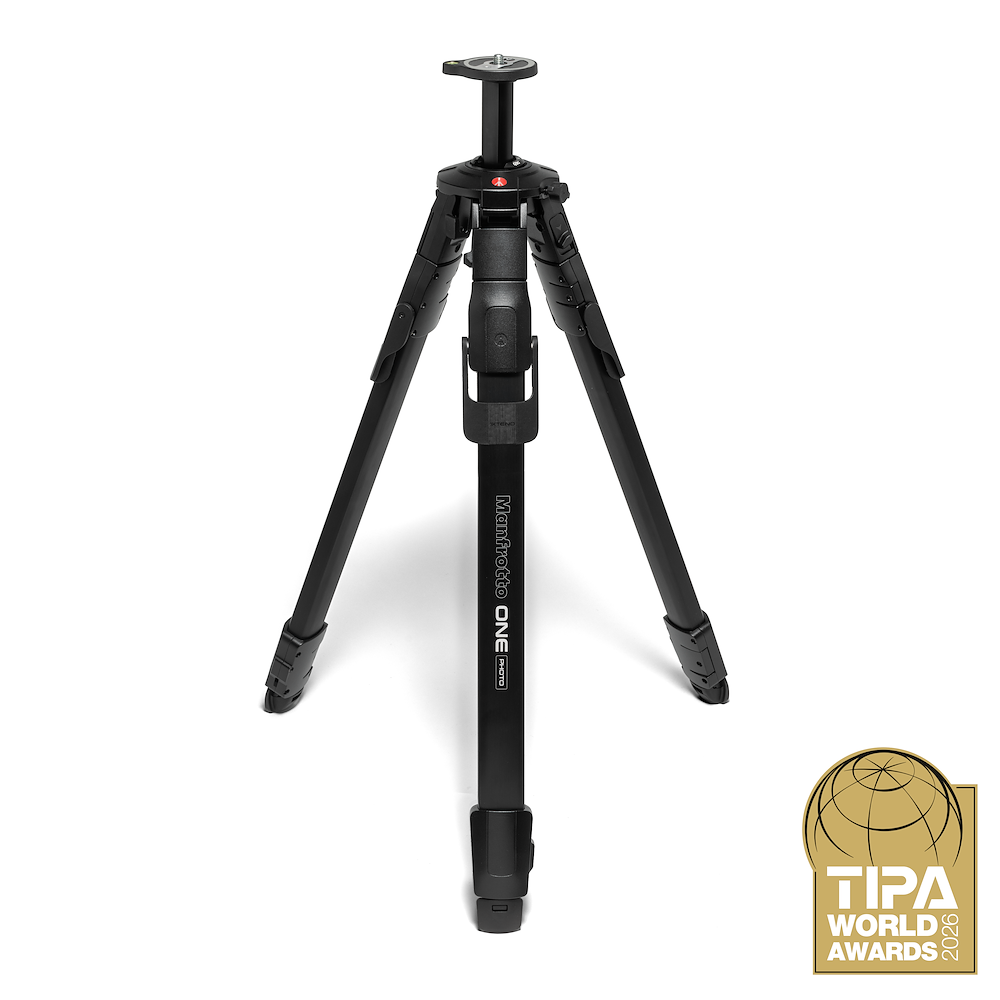
The exact MTONEPA product is the aluminum tripod legs without a camera head. Manfrotto lists a 3/8-inch top fitting, Q90 horizontal-column mechanism and no included bag; verify any seller-added bundle separately.
Explore this need in the finder →Can I use a head I already own?
The manufacturer describes a standard 3/8-inch universal mount for separately chosen heads. Check the head’s underside thread and plate/camera interface; this legs-only SKU does not include a head or promise camera-specific clearance.
Explore this need in the finder →Does the Q90 column make overhead framing possible?
The manufacturer documents the center column shifting between vertical and horizontal positions and lists a 12 kg UNI/PdR safety-payload figure, but neither fact establishes a safe off-axis load or stable result in a particular setup. Respect the manual and evaluate the camera, lens, extension and surface.
Explore this need in the finder →What it is: MTONEPA is the aluminum, three-section, headless version of Manfrotto’s ONE Photo tripod. The manufacturer describes a sliding center column that can move to a horizontal position, a quick-deploy XTEND leg mechanism, removable rubber feet with spikes beneath, and an Easy Link accessory point. It is a distinct package from the ball-head and three-way-head kits with MK model codes.
A legs-only setup, not a ready-to-shoot kit
The useful first decision is whether you already own a head you intend to use. Manfrotto lists MTONEPA with a standard 3/8-inch head attachment and says that a head can be chosen separately. The exact page also says a carrying bag is not included. A US B&H listing identifies the exact MFR code as MTONEPA and presents the legs-only configuration, supporting the market bridge without establishing every retailer’s bundle or availability.
This separation matters for weight. The manufacturer’s 3.112 kg figure is for the tripod, not the full camera support you will carry after adding a head, camera and lens. If you already have a compatible head, compare its mounting thread and plate with the ONE Photo’s platform before buying. The manufacturer describes the 3/8-inch fitting as a standard mount; that is not a guarantee that a particular head, clamp or plate is appropriate for every camera arrangement.
The distinctive column changes framing options
MTONEPA’s Q90 mechanism is documented as moving the center column from vertical to horizontal. The design creates another camera-positioning route for overhead, close-up and flat-lay framing, while the column can also be used for ordinary vertical positioning. That flexibility is a feature description, not evidence that a camera at the end of a horizontal column will remain stable in every setup. A long lens, a fully extended column, an off-center camera, surface movement and wind can all change the practical situation. The published 12 kg UNI/PdR safety-payload figure should not be mistaken for an independent stability test or an off-axis guarantee.
For low viewpoints, Manfrotto describes a modular column that can be shortened and a listed minimum height of 10 cm. The published maximum is 164 cm with the column up and 134 cm with it down. Those are tripod measurements, not the height of your camera’s viewfinder: the head, plate, camera body and your own stance add their own geometry.
What the published dimensions mean for carrying
The exact manufacturer page lists 65.5 cm closed and 3.112 kg. That is less long than the two head-equipped ONE Photo packages reviewed alongside it, but it is still a 65.5 cm piece of equipment. Measure the internal opening of the case, not only the external advertised length, and budget extra capacity for the separate head and any protective bag. There are three aluminum leg sections, flip locks, and angle positions of 20°, 50° and 81.5°; the source does not quantify setup time or vibration behavior, so these mechanisms should be evaluated as documented features rather than performance results.
The feet combine removable rubber contact surfaces with underlying spikes. That gives two described foot configurations, but does not tell us how well either behaves on a particular tile, deck, soil or slope. Follow the supplied instructions and choose feet for the actual surface; a spike is not a substitute for placing the tripod securely.
Checks before you choose it
MTONEPA is a plausible candidate when you need aluminum legs, a documented horizontal-column option and the freedom to supply your own head. It is less suitable when you need a head and bag in the manufacturer-listed package, or when your storage space cannot accept a 65.5 cm folded tripod. Check the exact MTONEPA code on the seller’s box, confirm that your head has the appropriate 3/8-inch fitting, and include that head in your real carry-weight estimate. If a seller adds a head, plate or bag, treat that as a separate bundle and verify its own part numbers.
No hands-on trial, stability test, load measurement or independent dimension measurement is claimed here. The assessment is based on the exact manufacturer page and an exact-code US listing; camera-specific clearance, seller-box contents, wind behavior, field stability and recall status have not been independently established.
Key specifications
Key details at a glance
| Listed support or kit weight | 3.11 kg |
|---|---|
| Leg material | Aluminum |
| Maximum height (as listed) | 164 cm |
| Maximum height, column down | 134 cm |
| Minimum height | 10 cm |
| Closed length | 65.5 cm |
| Leg sections | 3 |
| Leg-lock style | Flip locks |
| Head supplied with tripod legs | No |
| Upper head attachment | 3/8-inch screw attachment |
| Carrying bag included | No |
| Easy Link accessory connector | Yes |
| Manufacturer safety-payload figure (UNI/PdR 105:2021) | 12 kg |
| Leg-angle positions | 20 / 50 / 81.5° |
Use the exact model’s instructions for operating limits, supplied equipment and version differences.
Sources for this review
Sources for this assessment
Make the choice fit your whole camera setup
Start with your head, camera and lens, then use the published figures as screening limits rather than field-performance claims.